Paver Repair & Restoration Los Angeles
Paver repair in Los Angeles. Sinking pavers, spreading edges, drainage problems. Base-first diagnosis.
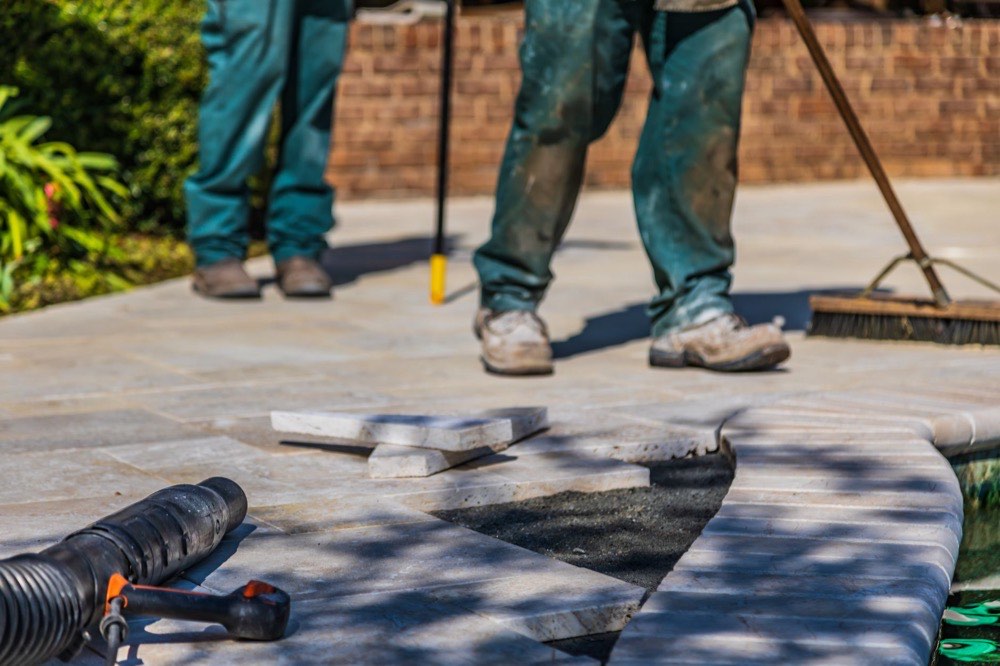
Most paver repairs don’t require replacing the entire surface. They require identifying what caused the failure and fixing it at the source – not just re-leveling the stones on top of a problem that hasn’t been addressed.
We repair paver systems throughout Los Angeles. The majority of calls we get are for sinking pavers, spreading edges, washed-out joints, and drainage problems that have been getting worse for a season or two.
Why Pavers Fail
Paver failures almost always originate below the surface. Understanding the failure mode determines the right repair.
Base Settlement
The most common failure. The compacted aggregate base wasn’t fully consolidated during installation, and it continues to compress under load and moisture cycling. Individual pavers or entire sections sink below the surrounding surface. Water pools in the low spots and accelerates the problem.
Repair requires lifting the affected pavers, adding and compacting base material to restore grade, and resetting the surface. Simply re-leveling pavers without addressing the base is a temporary fix that will repeat.
Edge Failure and Spreading
When edge restraints fail – either because they weren’t installed, weren’t properly spiked, or have deteriorated – pavers migrate outward from the center of the field. Joints widen, alignment is lost, and the surface becomes uneven.
Repair involves pulling back to the spreading edge, reinstalling proper edge restraint, compacting the base, and resetting the affected pavers.
Polymeric Sand Washout
Joints erode due to pressure washing, heavy rain, or improper initial installation of joint material. Once joints are open, weeds establish, pavers become loose, and water infiltrates the base.
If the base is still sound, re-sanding joints is a straightforward repair. If water has gotten into the base and caused settlement, base repair is required first.
Drainage Problems
Grade was established incorrectly during installation, or grade has changed due to settlement, causing water to pool on the surface or drain toward a structure. Drainage problems accelerate base failure and can cause foundation issues if water is directed toward the house.
Repair requires re-grading the affected area, which typically means lifting and resetting a section of the surface.
Repair or Full Replacement?
Repair makes sense when:
- The failure is localized to a specific area
- The base is sound in most of the installation
- The pavers themselves are intact and can be salvaged
- The failure mode is correctable without disturbing the full installation
Full replacement makes more sense when:
- Settlement is widespread across the installation
- The original base was never properly built
- Pavers are damaged, discontinued, or can’t be matched
- Drainage requires regrading the entire surface
We’ll assess the full installation during the site visit and give you an honest evaluation of whether targeted repair or full replacement is the better long-term answer.
Common Paver Repairs We Perform
- Section lifting and base repair
- Edge restraint repair and replacement
- Joint re-sanding with polymeric sand
- Drainage correction and regrading
- Individual paver replacement
- Crack repair and surface restoration
- Full surface reset on failed bases
What Paver Repair Costs
Repair costs depend entirely on the scope of the problem. Typical ranges:
- Joint re-sanding (polymeric sand): $1.50–$3.00 per sq ft
- Section lift-and-reset (base repair included): $8–$15 per sq ft
- Edge restraint repair: $12–$20 per linear foot
- Drainage correction: varies by scope – assessed on site
We’ll diagnose the problem, explain what caused it, and provide repair pricing before any work is scheduled.
The Four Failure Modes We See Most
- Inadequate base compaction – base settles after installation, dips and uneven surfaces appear within 1–2 seasons
- No proper drainage slope – water pools under the surface, weakens base, accelerates settlement
- Edge restraint failure – pavers migrate outward, joints open, perimeter unravels
- Insufficient excavation depth – thin base layers fail under vehicle load over time
We correct these by rebuilding from the base up – not by resetting pavers over a compromised foundation.
Frequently Asked Questions
Can you match my existing pavers if some need to be replaced?
Sometimes. Concrete pavers from major manufacturers are often still available in the same color and size. Natural stone like travertine varies by lot and can be difficult to match exactly. We’ll identify what you have and check availability before committing to a repair approach that depends on matching material.
How long does paver repair take?
Most repair projects are completed in one to three days. Larger sections requiring significant base work take longer. We’ll give you a timeline with the repair proposal.
My pavers were just installed and they’re already sinking. What happened?
Base failure on a new installation is almost always a compaction problem. The base material wasn’t properly compacted in lifts, or the subgrade wasn’t prepared correctly before the base was placed. This is a contractor workmanship issue. If you’re within any warranty period, the installing contractor should address it. If not, we can assess and repair.
Serving: Los Angeles · San Fernando Valley · Westside · Pasadena · Glendale · LA County