Most paver failures are predictable and preventable. They originate in installation decisions made during the first few days of the project – decisions that are invisible once the surface is complete. Understanding the failure modes helps you evaluate a contractor’s approach before work begins and diagnose problems accurately after they appear.
Failure Mode 1: Base Not Compacted
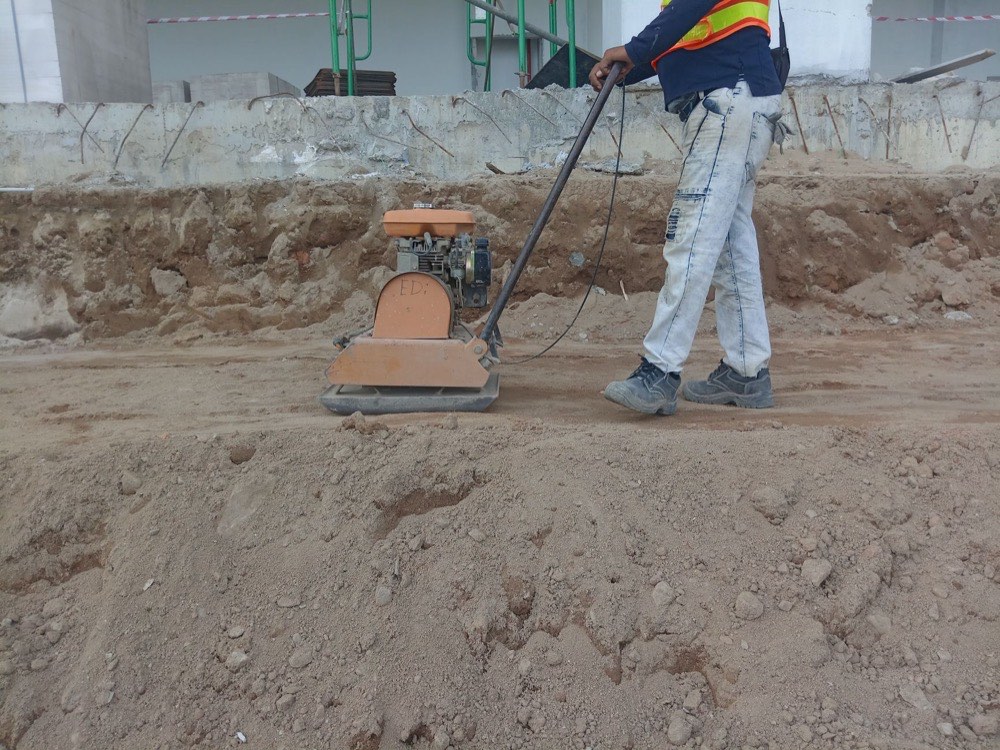
The most common cause of paver failure in Los Angeles. Aggregate base material must be compacted in lifts – typically 3–4 inch layers – using a plate compactor. Each lift must reach adequate compaction before the next layer is added.
When base is placed too deep without compaction lifts, the bottom layers don’t compact adequately. The surface looks solid at first. Over the first wet season, as water cycles through the base and traffic loads the surface, the base continues to consolidate. Sections settle. The surface develops low spots. Water pools. The problem accelerates.
How it shows: uneven surface, sections sinking, water pooling in low areas, usually appearing 6–18 months after installation.
Failure Mode 2: Insufficient Base Depth
For driveways, the base needs to be deeper than for pedestrian areas. Contractors who use the same 4-inch base for everything – patios and driveways alike – produce driveways that fail under vehicle loads.
The subgrade soil also matters. Expansive clay soils common in parts of Los Angeles require more depth or geogrid stabilization. A contractor who doesn’t assess soil conditions during the estimate may underbuild for site-specific conditions.
How it shows: cracking pavers, rutting under tire tracks, sections that shift under vehicle weight.
Failure Mode 3: No Edge Restraints (or Failed Edge Restraints)
Pavers are held in place by the surrounding field of pavers and the edge restraints at the perimeter. Without edge restraints – or with edge restraints that weren’t properly spiked into the base – the edge pavers migrate outward as traffic and thermal cycling push the field laterally.
Once edge pavers start moving, joints open, more movement follows, and the whole perimeter unravels.
How it shows: pavers spreading outward from the edges, widening joints at the perimeter, pavers lifting at the borders.
Failure Mode 4: Regular Sand in Joints
Regular sand in paver joints erodes with rain, irrigation, and traffic. Once joints are depleted, pavers become unstable, weeds establish, and water infiltrates the base.
Polymeric sand – which contains binders that harden when activated with water – resists erosion significantly better and inhibits weed growth. It’s not maintenance-free, but it outperforms regular sand by years in most applications.
How it shows: eroded joints, weeds growing between pavers, loose pavers rattling underfoot, ants establishing nests in joint voids.
Failure Mode 5: Drainage Not Addressed at Grade
Water that can’t drain off a paver surface will find its way into the base. Once in the base, it softens the aggregate, accelerates settlement, and in freeze-thaw climates (less relevant in LA but applicable in higher elevation areas) causes heaving.
In Los Angeles, the more common drainage failure is water directed toward the house – against the foundation, under the doorway, toward the garage floor. Poor grade establishment during installation causes drainage problems that can affect the structure.
How it shows: water pooling on the surface after rain, water infiltrating through doorways or into garages, foundation moisture problems that appear after paver installation.
How to Avoid These Failures
The questions to ask any paver contractor before work begins:
- What is the base depth specification for this application?
- What type of base material are you using?
- How will the base be compacted – what equipment, how many lifts?
- What edge restraint system are you using?
- Are you using polymeric sand for joints?
- How is drainage being handled at grade?
A contractor who can answer these questions specifically – not generically – understands what they’re doing. A contractor who can’t is likely to build a surface that fails.